Français
  Nederlands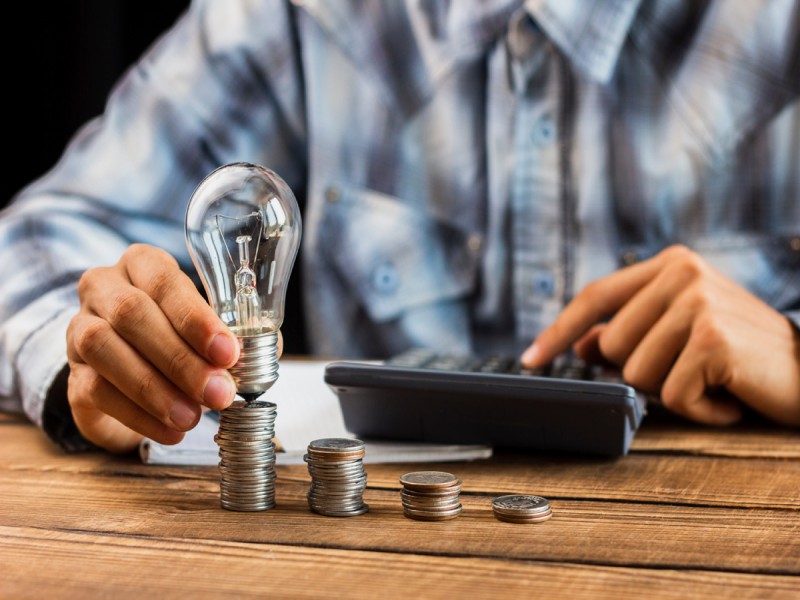
In recent years, energy costs for consumers worldwide have risen to unprecedented heights. These price increases, caused by geopolitical tensions, scarcity in the gas market, and the accelerated transition to sustainable energy sources, have had a deep impact on the disposable income of millions of households. Families are consequently forced to critically examine their daily habits and structurally revise their energy consumption. Where energy was previously a self-evident and relatively affordable basic utility, it has now become a prominent and heavy item on the monthly budget.
This new economic reality not only demands temporary cuts, but forces us to fundamentally rethink how we handle energy in our immediate living environment. The need to consume more consciously is greater than ever before, with the focus on finding a balance between comfort and affordability within the broader context of the global energy transition.
Small behavioral changes with a major impact
To cope with the rising costs immediately, many families initially resort to low-threshold behavioral changes that do not require large investments. Lowering the thermostat by just one degree can already yield significant annual savings on the gas bill. In addition, turning off appliances in standby mode is gaining popularity, as this so-called standby power consumption can unnoticedly determine a significant portion of the electricity bill. Shorter showers, consistently turning off lights in unused rooms, and making optimal use of household appliances such as washing machines and dishwashers also contribute directly to a lower bill.
Although these individual measures seem small on their own, they add up to a substantial effect over an entire year. Moreover, they increase general awareness of energy consumption within the family, laying the foundation for a long-term cultural change in which waste is systematically countered and efficiency becomes the new standard.
Investing in sustainable and structural solutions
In addition to the necessary short-term behavioral changes, more and more households are opting for a structural approach by investing in making their homes more sustainable. Improving the insulation level of roofs, walls, and floors is the most effective method to prevent heat loss and permanently reduce energy demand. Although the initial costs of such renovations can be substantial, they translate directly into a lower energy bill and a higher property value.
In addition, we see a strong increase in the installation of solar panels and heat pumps, making families less dependent on fluctuations in traditional fossil energy markets. By generating renewable energy themselves and consuming it wisely, consumers are transforming from passive buyers into active players in the energy market.
This transition to an energy-efficient home not only offers protection against future price shocks but also makes a crucial contribution to reducing the ecological footprint.
The role of government and the future of the energy market
The transition to more conscious energy consumption is not solely an individual responsibility; the government also plays a guiding and facilitating role. By offering subsidies, interest-free loans, and tax benefits, the government attempts to lower the threshold for energy-saving investments for broad segments of the population.
However, a major challenge remains in reaching vulnerable families who do not have the financial means to renovate their homes. For the future, it is essential that policymakers, energy suppliers, and citizens work closely together to keep the transition inclusive and fair. Ultimately, rising energy prices will lead to an accelerated acceptance of energy efficiency as a core value in our society.
While the current crisis forces us to make painful choices, it simultaneously lays the foundation for a more resilient, sustainable, and independent energy system that is better able to withstand the geopolitical and economic challenges of the twenty-first century.