Français
  Nederlands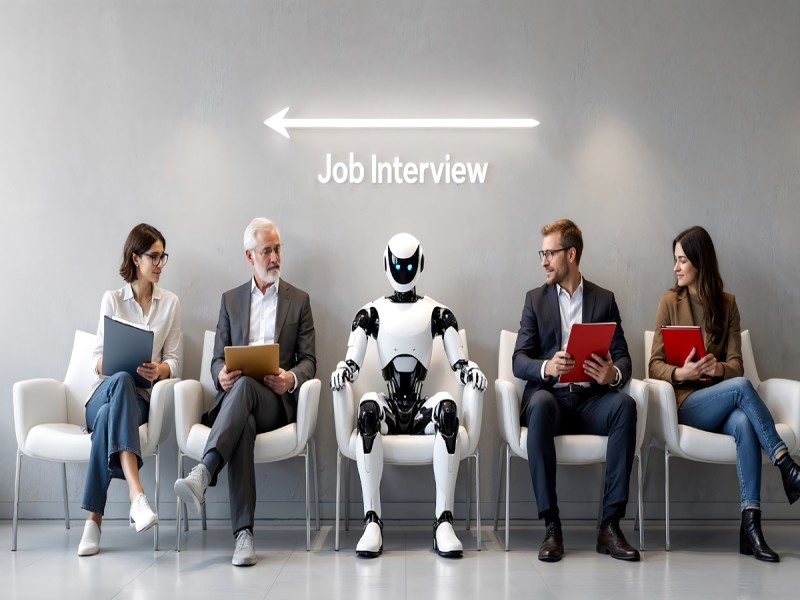
The rapid rise of artificial intelligence (AI) is redefining the foundations of the global labor market at an unprecedented pace. While past technological revolutions primarily automated manual and routine labor, the current AI wave is now also impacting cognitive and creative professions. This forces professionals in almost every sector to think critically about their professional future. Traditional career paths, which were previously linear and predictable for decades, are quickly disappearing and making way for dynamic, uncertain trajectories.
Employees are faced with the need to continuously adapt to technological systems that can perform tasks faster and more efficiently than humans. To remain successful, we must fundamentally rethink the way we acquire skills. The focus is permanently shifting from static professional knowledge to strategic agility.
This means that a one-time education is no longer sufficient to guarantee a lifelong career, creating the need to plan more actively and consciously in a constantly changing landscape.
The shift toward a culture of continuous learning
In this new era, the concept of a one-time study followed by a stable career is definitely a thing of the past. The concept of lifelong learning has transformed from a noble aspiration into an absolute necessity to remain relevant in the labor market. As AI takes over routine tasks and data analysis, professionals must focus on developing skills that machines cannot easily replicate. This includes complex problem-solving, critical thinking, and emotional intelligence.
Planning a career now requires a proactive attitude in which one constantly analyzes the market for emerging trends and technological shifts. Employees must be willing to reinvent themselves regularly and embrace new tools. Companies increasingly value flexibility and the ability to learn new systems quickly over specific historical experience, permanently changing the dynamics of recruitment and selection.
Strategic career planning in times of technological transition
Effectively planning a career during this technological disruption requires a strategic approach in which technology is seen not as a threat, but as a powerful partner. Instead of competing with algorithms, professionals must learn how to manage, instruct, and integrate these systems into their daily operations. This means that technical literacy is becoming a basic requirement for every role, regardless of the sector.
In addition, individuals must cultivate and profile their unique human skills, such as empathy, ethical judgment, and creative leadership. A successful career plan is no longer a step-by-step guide to a specific executive position, but a flexible roadmap aimed at building a broad portfolio of transferable competencies.
By emphasizing roles where human interaction and moral decision-making are crucial, job seekers can protect themselves against the risks of full automation.
The future of work: Synergy between human and machine
Ultimately, the impact of artificial intelligence will not lead to the end of work, but to a transformation of the nature of work itself. The most successful professionals of the future will be those who manage to create a harmonious synergy between human and machine. AI can process large amounts of data and identify patterns, but the human professional brings context, ethics, and strategic vision.
Planning a career in this new reality requires an optimistic yet realistic vision, investing in skills that are complementary to AI systems. Organizations will increasingly form hybrid teams in which human intuition and computational power come together. Those who manage to proactively navigate this transition by continuing to learn and adapt will discover that artificial intelligence is not an obstacle, but rather a catalyst for unprecedented professional growth and innovation.